
Guides
Source-led reading on what the figures mean before you compare them. 22 guides so far.
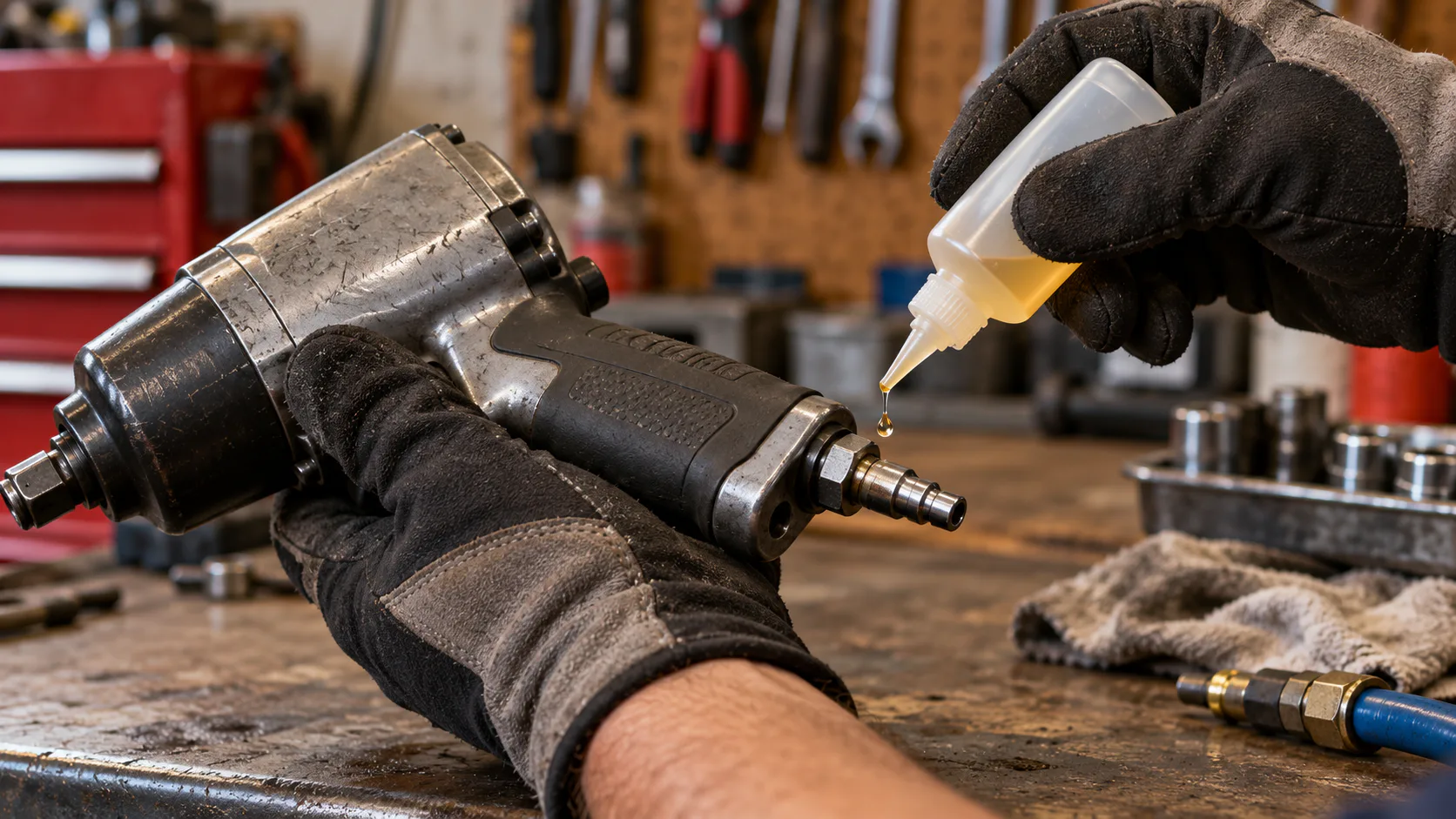 LatestAir tools, 6 min read
How and When to Oil Air Tools
Find the right oiling routine for a pneumatic tool, including manual inlet oiling, inline lubricators, grease points and model-specific intervals.
 Troubleshooting, 7 min readHow to Find Air Leaks on a Compressor, Hose and FittingsTrace a compressed-air leak safely with listening, approved leak-detection solution and an ordered check from receiver to tool.
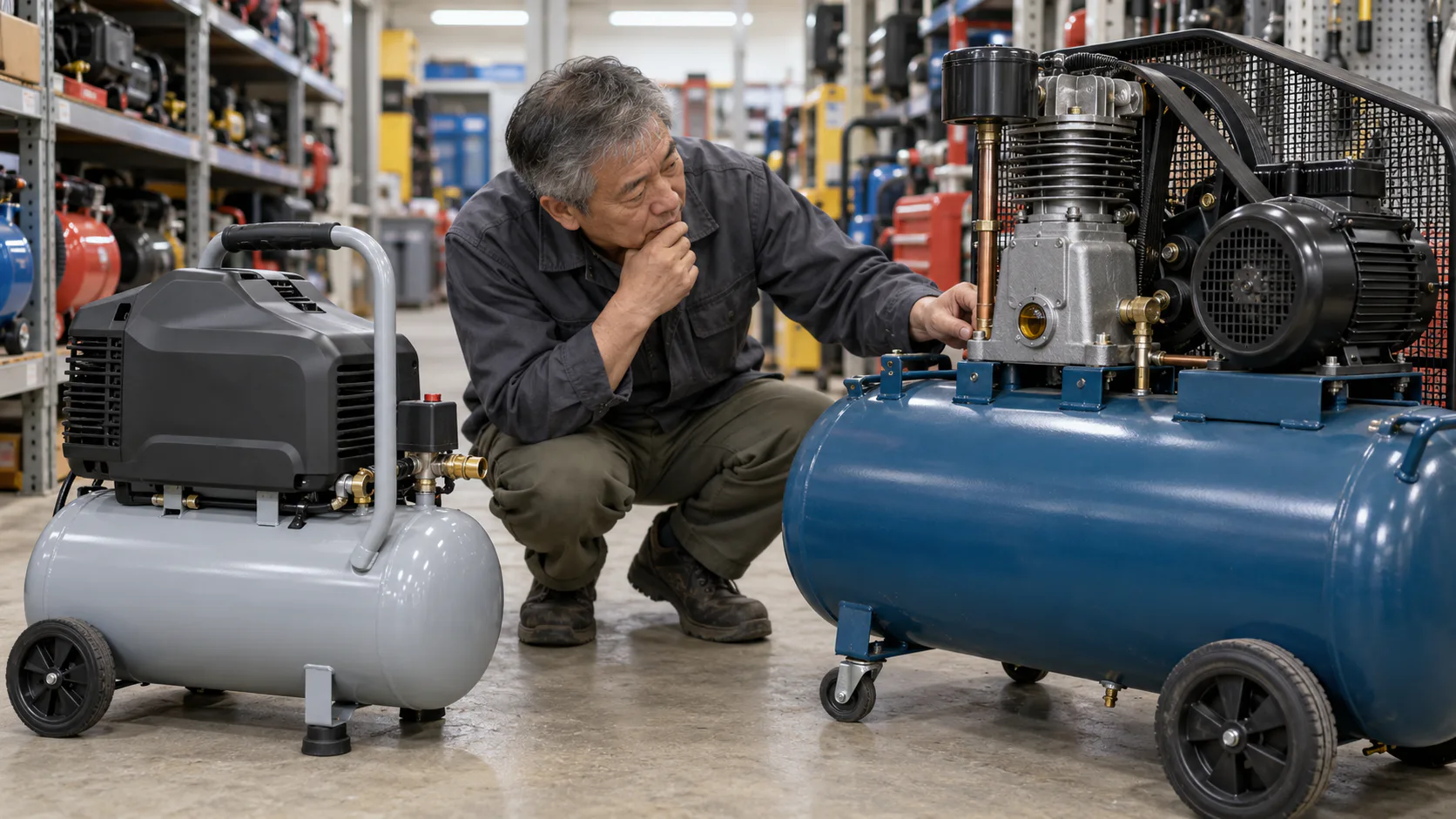 Buying guides, 7 min readOil-Free vs Oil-Lubricated Air Compressors: Which Do You Need?Compare pump lubrication, maintenance, portability, noise and air-quality documentation before choosing an oil-free or oil-lubricated compressor.
 Compressors, 6 min readWhat Are Cut-In and Cut-Out Pressure Settings on an Air Compressor?Learn when a compressor's pressure switch starts and stops the motor, how that differs from regulated outlet pressure and what abnormal cycling can mean.
 Troubleshooting, 7 min readWhy Is My Air Compressor Taking So Long to Fill?Use a repeatable fill-time check to separate intake restrictions, air leaks, check-valve trouble and internal pump wear.
 Compressors, 6 min readWhy Is Tank Pressure Higher Than Regulator Outlet Pressure?Learn what the two compressor gauges show, why the regulator sets a lower tool-side pressure and what a pressure drop during use can reveal.
 Compressors, 7 min readWhy Is Water Coming Out of My Air Compressor and Tools?Find where compressor moisture comes from, how it reaches a hose or air tool and what to check from the receiver drain to the point of use.
 Compressors, 6 min readCan You Link Two Air Compressors Together? CFM Math and System LimitsTwo compressor ratings can be added on paper when their units and pressure match, but a shared air system also needs compatible equipment, controls, piping and electrical design.
 Sizing, 6 min readHow Air Hose Length and Diameter Affect Pressure at Your ToolSee how hose length, inside diameter, tubing, and restrictive fittings affect compressed-air pressure, with published pipe data and a worked hose-sizing example.
 Sizing, 6 min readHow Much Air Does a 1/2-Inch Impact Wrench Need at 90 PSI?Compare published average, free-speed, and load airflow for five half-inch impact wrenches with exact compressor output ratings at 90 PSI.
 Sizing, 6 min readHow to Calculate Total CFM for Multiple Air ToolsAdd air-tool ratings without mixing pressures or source labels. Worked examples show published average fields, under-load fields and the limits of duty-cycle estimates.
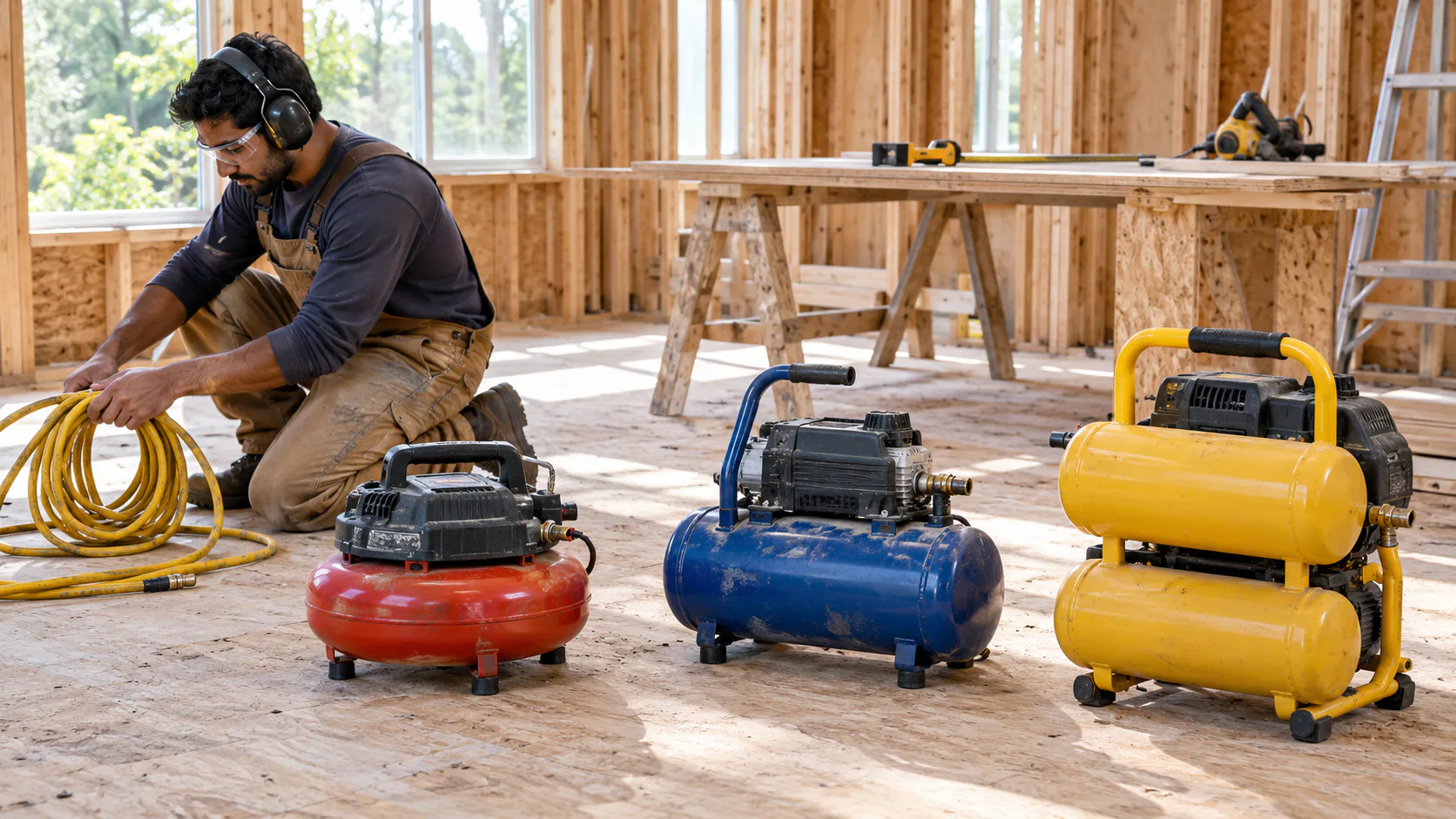 Compressors, 6 min readPancake vs Hot Dog vs Twin-Stack Air CompressorsCompare manufacturer-labelled pancake, hot-dog and twin-stack compressors, then check the delivery rating, stored volume and maintenance access that actually affect the purchase.
 Sizing, 6 min readWhat Size Air Compressor Do You Need for a Framing Nailer?Calculate airflow for one or more framing nailers from firing rate, then compare that requirement with exact compressor output ratings at the same pressure.
 Troubleshooting, 6 min readWhy Air Grinders and Sanders Slow Down on Small CompressorsA grinder or sander that fades during a pass may be outrunning the compressor, losing pressure through the air line, or exposing a rating mismatch. Here is how to separate those causes.
 Compressors, 8 min readMaximum PSI Is Not a Compressor's Air-Delivery RatingSee three manufacturer examples where the highest maximum PSI does not have the highest CFM at 90 PSI, then find the delivery field a comparison needs.
 Methodology, 9 min readHow Air Tool Match Decides Which Records to PublishThe admission, transcription, comparison, and abstention rules behind the site's air-tool and compressor records.
 Compressors, 7 min readWhere to Find an Air Compressor's CFM RatingFor an air-tool comparison, find the compressor's delivered airflow at a stated pressure, such as 4.2 CFM at 90 PSI, without substituting displacement or maximum PSI.
 Methodology, 7 min readCFM vs SCFM vs ACFM: What Can You Compare?Learn what each airflow label records, why matching PSI is not enough, and when air-tool and compressor figures need to stay separate.
 Air tools, 6 min readWhen an Air Tool Page Does Not Publish CFMWhy this site leaves a tool out when the manufacturer page does not publish a usable air-consumption field, and what a missing value does and does not mean.
 Compressors, 7 min readWhy Compressor CFM Changes at 40 PSI and 90 PSIWhy compressor product pages can list different published CFM figures at 40 PSI and 90 PSI, and how to read those conditions without turning them into a sizing recommendation.
 Methodology, 8 min readHow to Compare Air Tool CFM With Compressor OutputA source-backed way to compare an air tool's published CFM with a compressor's output without mixing pressure or rating contexts.
 Air tools, 6 min readAverage vs Load CFM: Which Air Tool Rating Are You Comparing?How to read an air tool specification that lists both average and load CFM, and why a comparison must keep the manufacturer label intact.